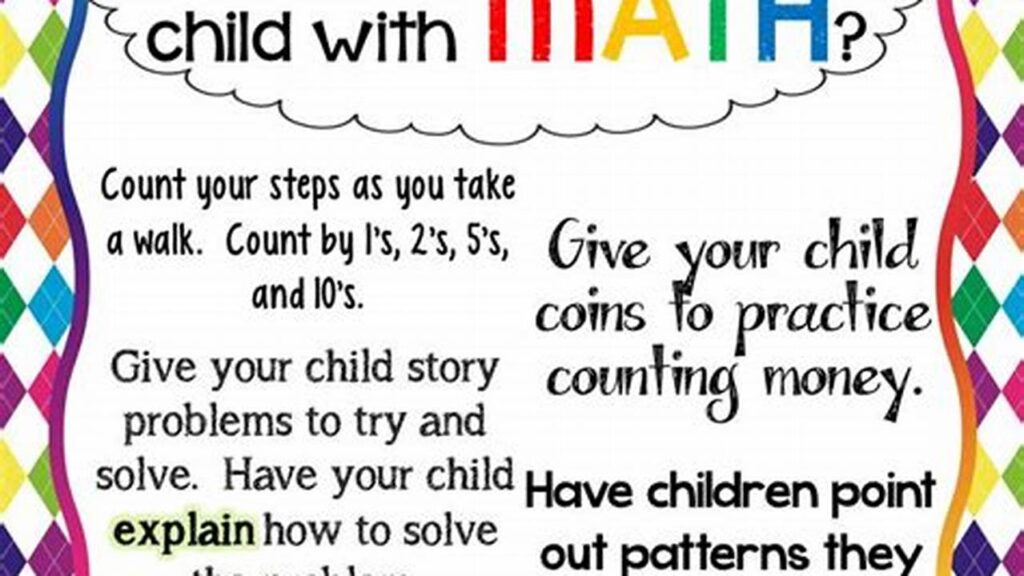

Supplementing classroom learning with at-home math practice can significantly benefit children’s mathematical development. Engaging parents in this process strengthens the child’s understanding, builds confidence, and fosters a positive attitude towards mathematics. Practical, accessible strategies make home-based math activities enjoyable and effective for both parents and children.
Real-World Connections
Integrating mathematical concepts into everyday activities makes learning more meaningful. Cooking, shopping, and even playing games can provide opportunities to practice math skills in a natural and engaging context.
Manipulatives and Visual Aids
Using physical objects like blocks, counters, or even household items helps children visualize abstract mathematical concepts. These tools provide a concrete representation of numbers and operations, facilitating understanding.
Games and Puzzles
Board games, card games, and puzzles often involve strategic thinking, problem-solving, and numerical manipulation, making them excellent tools for reinforcing math skills in a fun and interactive way.
Story Problems
Creating or using story problems related to the child’s interests can make math more engaging and relatable. This approach helps children connect mathematical concepts to real-world scenarios and develop problem-solving skills.
Adaptive Learning
Tailoring activities to the child’s current skill level and learning pace is essential for effective learning. Starting with simpler concepts and gradually increasing complexity ensures that the child remains challenged but not overwhelmed.
Positive Reinforcement
Encouraging effort and celebrating successes builds the child’s confidence and motivation. A positive learning environment fosters a love for math and encourages continued exploration.
Regular Practice
Consistent, short practice sessions are more effective than infrequent, lengthy ones. Regular engagement helps solidify learning and maintain momentum.
Open Communication
Maintaining open communication with the child’s teacher allows parents to understand classroom learning objectives and tailor home activities to complement classroom instruction.
Tips for Effective Home Math Practice
Tip 1: Keep it short and sweet. Short, focused practice sessions are more effective and less likely to lead to frustration.
Tip 2: Relate math to the child’s interests. Connecting math to hobbies and interests makes learning more engaging.
Tip 3: Make it a game. Games and puzzles are a fun way to practice math skills without it feeling like work.
Tip 4: Be patient and encouraging. A positive attitude goes a long way in fostering a love for math.
Frequently Asked Questions
How can I make math fun for my child?
Incorporate games, puzzles, and real-world activities to make math more engaging and enjoyable.
What if my child is struggling with a particular concept?
Break the concept down into smaller steps, use manipulatives, and provide plenty of practice opportunities. Consult with the child’s teacher if additional support is needed.
How much time should be dedicated to at-home math practice?
Short, regular sessions (15-20 minutes) are generally more effective than long, infrequent ones.
What resources are available to support at-home math learning?
Numerous online resources, workbooks, and educational games are available to supplement classroom learning. Libraries and educational stores are also excellent sources of materials.
How can I track my child’s progress?
Regularly assess understanding through informal quizzes, games, and observation during activities. Communicate with the child’s teacher to stay informed about classroom progress.
How can I involve my child in setting math learning goals?
Discuss learning objectives and collaboratively set achievable goals. This fosters a sense of ownership and motivates the child to actively participate in their learning journey.
By implementing these strategies, parents can play a vital role in fostering their children’s mathematical development and creating a positive and engaging learning experience at home.