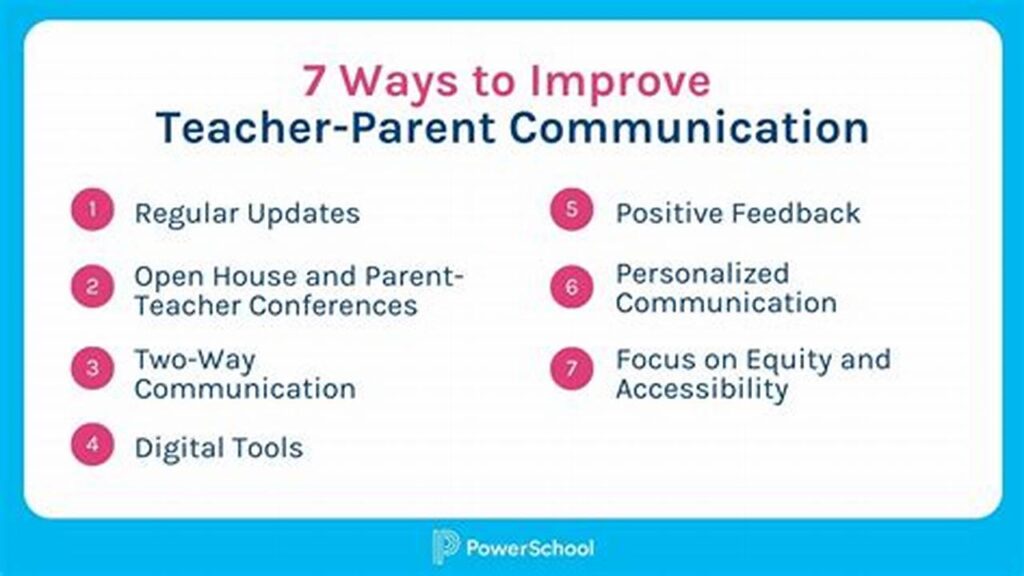

Effective communication between parents and teachers is the cornerstone of a successful educational experience. A strong parent-teacher partnership fosters a supportive learning environment, enabling students to thrive academically and socially. This collaborative approach allows for consistent expectations, early identification of challenges, and tailored support strategies, ultimately contributing to improved student outcomes.
Improved Student Performance
Open communication channels facilitate a shared understanding of student strengths and weaknesses, enabling both parents and teachers to implement targeted interventions and support learning more effectively.
Early Identification of Learning Gaps
Regular communication helps identify potential learning gaps or behavioral issues early on, allowing for timely intervention and preventing them from escalating.
Enhanced Home-School Connection
Consistent dialogue creates a bridge between the home and school environments, ensuring consistency in expectations and reinforcing learning experiences across both settings.
Increased Parental Involvement
When parents feel connected and informed, they are more likely to actively participate in their child’s education, contributing to a richer learning experience.
Stronger Teacher-Parent Relationships
Building trust and rapport between teachers and parents creates a positive and supportive atmosphere, facilitating open communication and collaborative problem-solving.
Reduced Behavioral Issues
Consistent communication and shared expectations can help address behavioral challenges more effectively, promoting a positive classroom environment.
Improved Student Well-being
When parents and teachers work together, students feel more supported and understood, leading to improved emotional well-being and a greater sense of belonging.
Greater Educational Equity
Effective communication strategies can help bridge gaps in access and resources, ensuring that all students receive the support they need to succeed.
Increased Teacher Morale
Feeling supported by parents and having open communication lines can significantly boost teacher morale and job satisfaction.
Tips for Effective Communication
Regularly scheduled meetings: Establish routine parent-teacher conferences, both formal and informal, to discuss student progress and address any concerns.
Utilize various communication platforms: Employ a range of communication methods, such as email, phone calls, messaging apps, and school portals, to ensure accessibility and responsiveness.
Provide clear and concise information: Communicate information clearly and directly, avoiding jargon and focusing on actionable insights and recommendations.
Active listening and empathy: Foster a culture of active listening and empathy, creating a safe space for open dialogue and collaborative problem-solving.
Frequently Asked Questions
How can I initiate communication with my child’s teacher?
Reach out to the teacher directly through email, phone, or the school’s preferred communication platform. Express your interest in collaborating and establishing open communication.
What if I have concerns about my child’s academic performance?
Schedule a meeting with the teacher to discuss your concerns and collaboratively develop strategies to support your child’s learning.
How can I stay informed about classroom activities and events?
Subscribe to classroom newsletters, check the school website or portal regularly, and attend school events to stay connected and informed.
What if I disagree with the teacher’s approach?
Schedule a meeting to discuss your concerns respectfully and openly. Focus on finding common ground and solutions that benefit the student.
How can I support communication if I have limited availability?
Explore alternative communication methods like email or pre-scheduled phone calls. Communicate your availability to the teacher and establish a consistent communication plan.
What role does technology play in facilitating parent-teacher communication?
Technology provides numerous platforms for seamless communication, from dedicated school apps to video conferencing tools. These platforms can enhance accessibility and streamline information sharing.
Fostering strong parent-teacher communication is an ongoing process that requires commitment and collaboration from both sides. By prioritizing open dialogue, mutual respect, and shared goals, schools can create a thriving learning environment where every student has the opportunity to succeed.