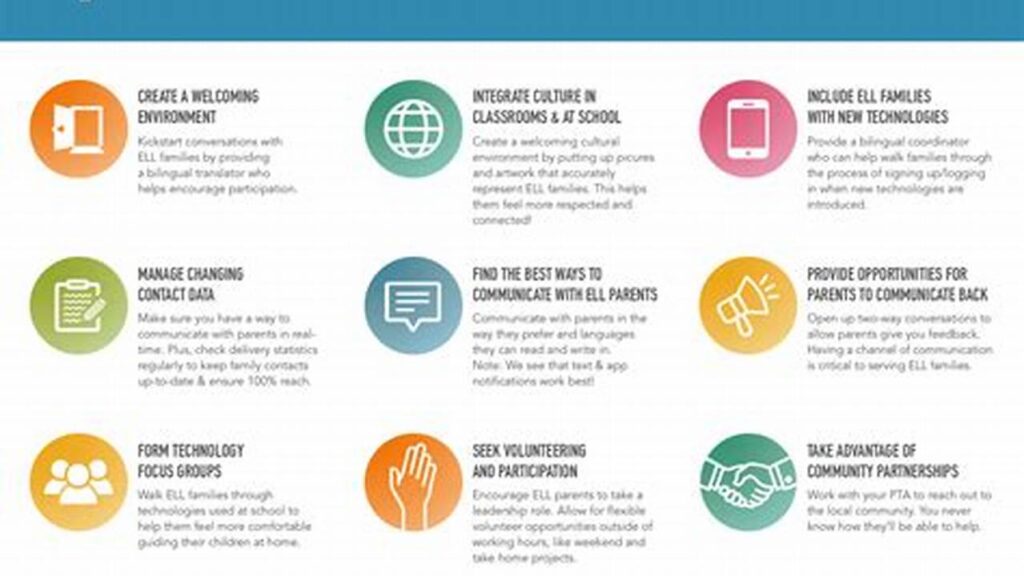

Facilitating academic achievement for English Language Learners (ELLs) requires a multifaceted approach, and a crucial component of this is strong parental involvement. Creating a collaborative environment between schools and families empowers students by providing consistent support and reinforcing learning both at home and in the classroom. This leads to improved language acquisition, better academic performance, and increased student confidence and well-being. A well-structured parent engagement program also fosters a stronger school community and bridges cultural gaps, benefiting all students and families.
Building Trust and Relationships
Open communication and culturally sensitive outreach are essential for building rapport with ELL families. Schools can achieve this by providing translated materials, employing bilingual staff, and hosting events that celebrate diverse cultures.
Two-Way Communication
Establishing clear channels for communication, such as regular newsletters, parent-teacher conferences, and language-accessible online platforms, ensures that families stay informed and can actively participate in their child’s education.
Culturally Relevant Activities
Incorporating culturally relevant materials and activities into the curriculum and school events validates students’ backgrounds and enhances their learning experience.
Language Support Services
Providing language support services, including interpretation and translation, makes information accessible to all families and empowers them to engage effectively with the school.
Workshops and Training
Offering workshops and training sessions on topics relevant to ELL education, such as language acquisition strategies and navigating the school system, equips parents with the knowledge and tools they need to support their children’s learning.
Home-School Connection Activities
Providing families with resources and activities to support learning at home strengthens the connection between school and home and promotes consistent learning.
Parent Leadership Opportunities
Empowering parents to take on leadership roles within the school community fosters a sense of ownership and strengthens the partnership between families and schools.
Celebrating Student Success
Recognizing and celebrating student achievements, both big and small, motivates students and strengthens the school community.
Community Partnerships
Collaborating with community organizations that serve ELL families expands resources and support systems available to students and their families.
Ongoing Evaluation and Improvement
Regularly evaluating and adapting parent engagement strategies ensures that they remain effective and responsive to the evolving needs of the school community.
Tips for Effective Implementation
Start Small and Build Momentum: Begin with a few key initiatives and gradually expand as capacity and resources allow.
Involve Parents in the Planning Process: Seek input from families to ensure that strategies are culturally relevant and address their specific needs.
Provide Clear and Accessible Information: Ensure that all communication is translated and easy to understand.
Celebrate Successes and Learn from Challenges: Regularly reflect on the effectiveness of strategies and make adjustments as needed.
Frequently Asked Questions
How can schools overcome language barriers to engage ELL parents?
Utilizing translation and interpretation services, providing multilingual materials, and employing bilingual staff can effectively bridge language gaps.
What are some examples of culturally relevant activities?
Incorporating cultural celebrations, using literature that reflects students’ backgrounds, and inviting community members to share their experiences are a few examples.
How can schools measure the effectiveness of their parent engagement strategies?
Tracking parent participation in school events, surveying families about their experiences, and monitoring student academic progress can provide valuable insights.
What are some common challenges to ELL parent engagement and how can they be addressed?
Common challenges include time constraints, cultural differences, and lack of transportation. Offering flexible meeting times, providing childcare, and partnering with community organizations can help address these barriers.
By prioritizing and implementing effective parent engagement strategies, schools can create a supportive and inclusive learning environment that empowers ELL students to reach their full potential. The benefits extend beyond individual students, enriching the entire school community and fostering a culture of collaboration and understanding.