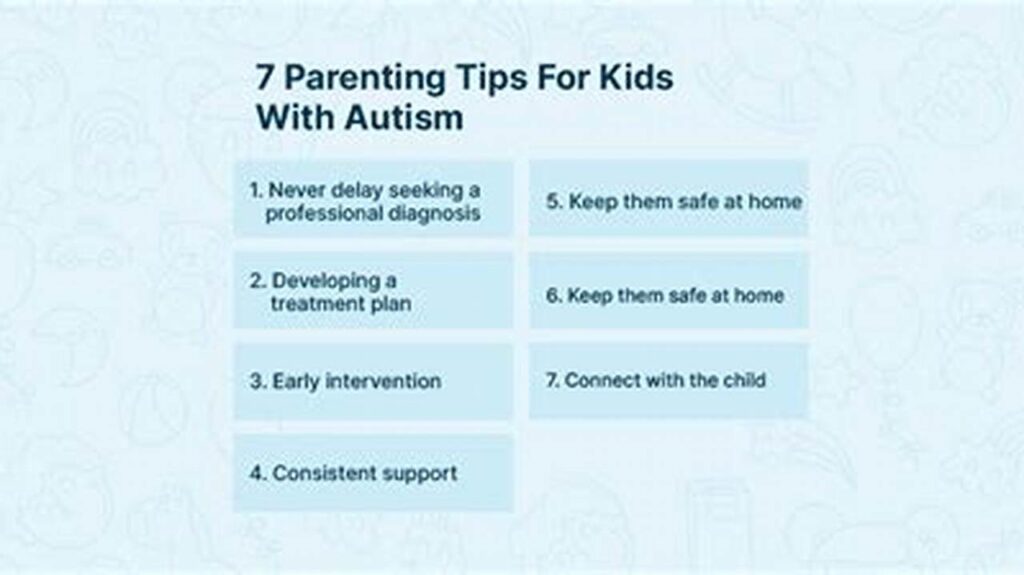

Navigating the world of autism as a parent requires understanding, patience, and a toolbox of effective strategies. Raising a child with autism presents unique challenges and rewards, and employing evidence-based approaches can significantly enhance the child’s development and well-being while fostering a positive family dynamic.
Building a Structured Environment
Predictability and routine can ease anxiety and promote a sense of security for autistic children. Consistent schedules, clear expectations, and visual aids can contribute to a calmer and more manageable environment.
Enhancing Communication
Communication difficulties are common in autism. Utilizing augmentative and alternative communication (AAC) methods, such as picture exchange systems or sign language, can bridge communication gaps and facilitate expression.
Focusing on Strengths and Interests
Every child possesses unique strengths and passions. Nurturing these areas can boost self-esteem, motivation, and overall development. Incorporating special interests into learning activities can make education more engaging.
Addressing Sensory Sensitivities
Many autistic individuals experience sensory processing differences. Understanding and accommodating these sensitivities, whether they involve hypersensitivity or hyposensitivity to stimuli, is crucial for creating a comfortable and supportive environment.
Promoting Social Skills Development
Social interaction can be challenging for autistic children. Structured social skills training, role-playing, and opportunities for interaction in supportive settings can foster social competence and confidence.
Collaborating with Professionals
Working closely with therapists, educators, and other professionals involved in the child’s care is essential for developing a comprehensive and individualized support plan.
Seeking Support Networks
Connecting with other families of autistic children can provide valuable emotional support, practical advice, and a sense of community.
Prioritizing Self-Care
Caring for a child with autism can be demanding. Parents need to prioritize their own well-being to maintain the energy and resilience required to provide effective support.
Understanding Individualized Needs
Autism is a spectrum disorder, meaning that each individual experiences it differently. Tailoring strategies to the child’s specific needs and strengths is essential for maximizing their potential.
Promoting Independence
Fostering independence is a key goal in supporting autistic children. Teaching life skills and providing opportunities for decision-making can empower them to navigate daily tasks and achieve greater autonomy.
Tips for Effective Parenting
Visual Schedules: Create visual schedules using pictures or symbols to help children understand and anticipate daily routines.
Sensory Breaks: Provide quiet spaces or sensory activities to help children regulate their sensory input and manage overwhelming situations.
Positive Reinforcement: Use positive reinforcement to encourage desired behaviors and build self-esteem.
Clear and Concise Communication: Use simple language and avoid idioms or sarcasm, which can be difficult for autistic children to understand.
Frequently Asked Questions
What are some early signs of autism?
Early signs can include limited eye contact, delayed language development, repetitive behaviors, and unusual reactions to sensory input.
How is autism diagnosed?
Diagnosis involves a comprehensive evaluation by a team of professionals, including developmental pediatricians, psychologists, and speech-language pathologists.
What are the different types of therapies available for autism?
Various therapies, including applied behavior analysis (ABA), speech therapy, occupational therapy, and social skills training, can support development and address specific challenges.
Where can I find resources and support for my autistic child?
Numerous organizations, such as the Autism Society of America and the Autistic Self Advocacy Network, offer resources, support groups, and advocacy for autistic individuals and their families.
How can I best support my child’s transition to adulthood?
Planning for adulthood should begin early and focus on developing independent living skills, vocational training, and social supports to facilitate a successful transition.
What are common misconceptions about autism?
Common misconceptions include the belief that autistic individuals lack empathy or that autism is caused by vaccines. These are not supported by scientific evidence.
Raising a child with autism is a journey that requires ongoing learning, adaptation, and unwavering commitment. By implementing effective strategies and seeking appropriate support, parents can empower their children to thrive and reach their full potential.