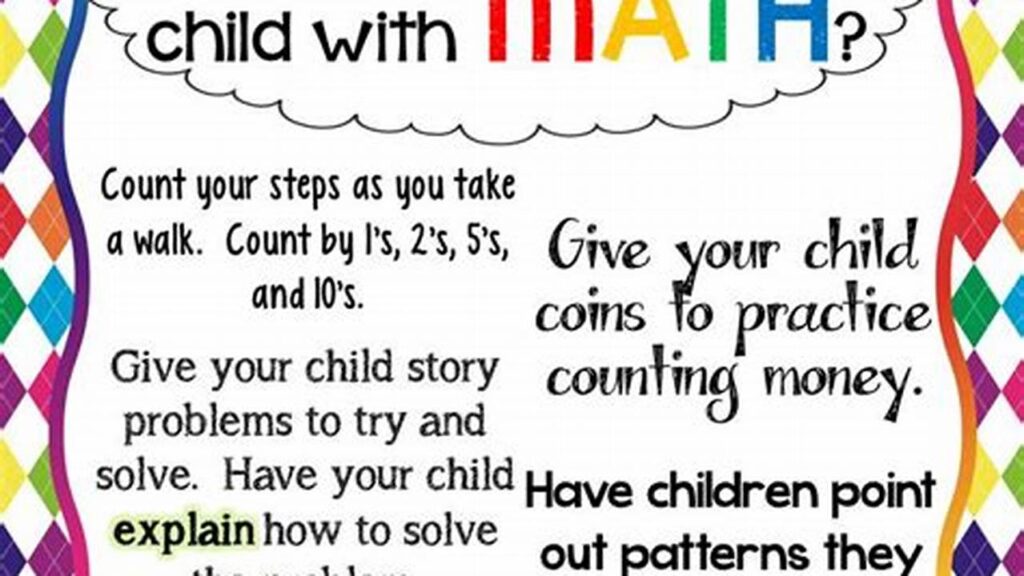

Numerous approaches can foster a positive and productive math learning environment in the home. These methods can transform mathematics from a daunting subject into an engaging and enjoyable experience for children, strengthening their foundational skills and building confidence. This exploration delves into practical, accessible strategies that parents can implement to support their children’s mathematical development.
Relatable Applications
Connecting mathematical concepts to everyday situations, such as cooking, shopping, or building, helps children understand the practical relevance of math.
Manipulatives and Visual Aids
Utilizing objects like blocks, counters, or even household items can make abstract concepts more concrete and easier to grasp.
Games and Puzzles
Board games, card games, and puzzles often involve strategic thinking and problem-solving, naturally reinforcing mathematical skills.
Story Problems
Creating or using story problems based on familiar scenarios can make math more engaging and help children apply their knowledge.
Open-Ended Questions
Encouraging exploration and critical thinking through open-ended questions helps children develop a deeper understanding of mathematical principles.
Positive Reinforcement
Creating a supportive and encouraging environment where mistakes are seen as learning opportunities is crucial for building confidence.
Regular Practice
Consistent, short bursts of practice are more effective than infrequent, lengthy sessions. Even a few minutes of daily practice can make a significant difference.
Tailored Approach
Adapting activities to a child’s individual learning style and pace ensures they are challenged appropriately and remain motivated.
Collaboration and Discussion
Working together on math problems allows children to learn from each other and develop their communication skills.
Leveraging Technology
Educational apps and online resources can provide interactive and engaging learning experiences.
Tip 1: Start Small and Build Confidence
Begin with basic concepts and gradually introduce more complex ideas as the child’s understanding grows.
Tip 2: Make it Fun!
Incorporating playfulness and creativity into math activities can keep children engaged and motivated.
Tip 3: Be Patient and Supportive
Learning takes time and effort. Providing consistent encouragement and support is essential.
Tip 4: Connect with Educators
Communicating with teachers can provide insights into a child’s strengths and weaknesses, allowing for targeted support at home.
How can I incorporate math into daily routines?
Opportunities abound! Cooking involves measurements and fractions; shopping requires calculations of price and change; even setting the table can introduce patterns and sequencing.
What if my child struggles with a particular concept?
Breaking down the concept into smaller, manageable steps, using different teaching methods, and seeking additional resources can help overcome challenges.
Are there online resources available to support at-home math learning?
Many websites and apps offer interactive math games, practice exercises, and educational videos tailored to different age groups and skill levels.
How can I make math less intimidating for my child?
Focusing on the practical applications of math, using positive language, and celebrating small successes can create a more positive learning experience.
By implementing these strategies, parents can play a vital role in nurturing their children’s mathematical abilities, fostering a love for learning, and preparing them for future success.