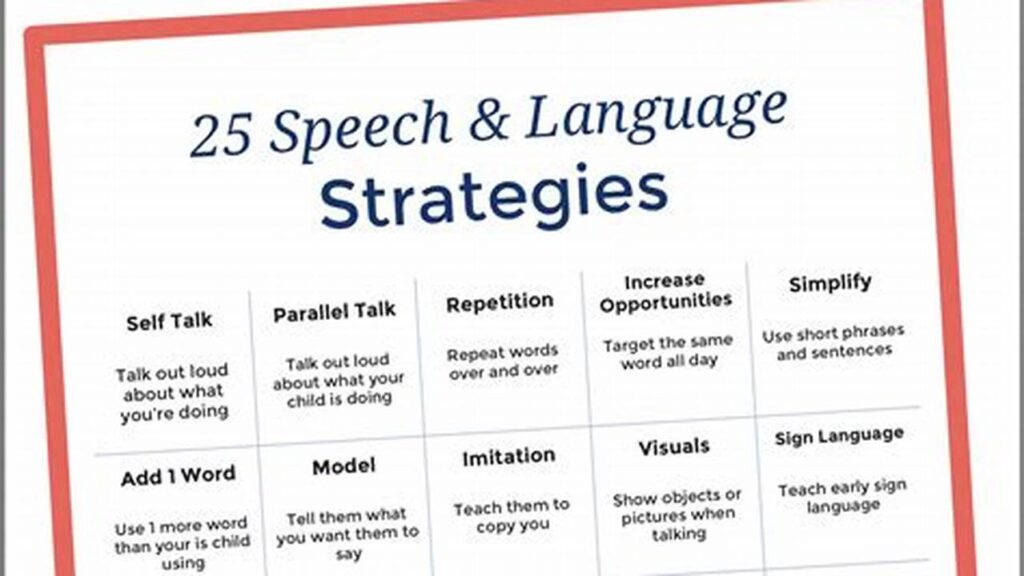

Nurturing a child’s communication abilities is a cornerstone of their development, impacting their social interactions, academic progress, and overall well-being. Providing appropriate support and employing proven techniques can significantly enhance a child’s speech and language acquisition. This information offers valuable guidance for parents seeking to foster these crucial skills.
Importance of Early Intervention
Addressing communication challenges early maximizes a child’s potential for improvement. Early intervention harnesses the brain’s plasticity during formative years.
Creating a Communication-Rich Environment
Surrounding children with language through conversations, storytelling, and reading aloud stimulates language development.
Active Listening and Responsive Interactions
Giving children undivided attention and responding thoughtfully encourages them to communicate further.
Modeling Correct Speech and Language
Children learn by imitation. Using clear pronunciation and grammatically correct sentences provides a strong foundation.
Using Play-Based Activities
Incorporating language-rich activities into playtime makes learning engaging and enjoyable.
Encouraging Social Interaction
Interacting with peers provides opportunities for children to practice communication skills in real-life situations.
Reading Together Regularly
Shared reading experiences expose children to new vocabulary, sentence structures, and storytelling techniques.
Singing Songs and Rhymes
Music and rhythm aid language development by enhancing memory and phonological awareness.
Limiting Screen Time
Excessive screen time can hinder language development. Prioritizing face-to-face interactions is crucial.
Seeking Professional Guidance When Necessary
If concerns arise, consulting a speech-language pathologist can provide expert assessment and personalized strategies.
Tips for Encouraging Communication
Follow the child’s lead: Observe their interests and engage in conversations about topics that excite them.
Ask open-ended questions: Encourage elaborated responses rather than simple yes/no answers.
Use visual aids: Pictures, objects, and gestures can support understanding and expression.
Be patient and understanding: Allow children time to formulate their thoughts and express themselves without interruption.
Frequently Asked Questions
At what age should I be concerned about my child’s speech development?
While developmental milestones vary, consulting a professional is advisable if significant delays or difficulties are observed by age three.
How can I encourage my child to speak more clearly?
Modeling clear pronunciation and engaging in activities that focus on specific sounds can be beneficial.
What are some signs of a language delay?
Limited vocabulary, difficulty understanding simple instructions, and struggling to form sentences may indicate a language delay.
How can I support my child’s language development at home?
Creating a language-rich environment, reading regularly, and engaging in meaningful conversations are essential.
Are there any resources available for parents concerned about their child’s communication skills?
Numerous online resources, books, and local support groups offer valuable information and guidance.
What is the role of a speech-language pathologist?
Speech-language pathologists assess and treat communication disorders, providing personalized interventions and support.
Investing time and effort in fostering a child’s communication abilities yields significant long-term benefits. By implementing these strategies, parents can empower their children with the essential skills needed for academic success, social confidence, and overall well-being.