
Developing strong communication skills is crucial for a child’s success in all aspects of life. Parental involvement plays a significant role in nurturing these abilities from an early age. This article provides valuable insights and practical strategies for parents to actively support their children’s speech development.
Importance of Early Speech Development
Effective communication lays the foundation for academic achievement, social interaction, and emotional well-being. Early intervention is key to addressing potential delays and fostering confident communication.
Creating a Language-Rich Environment
Surrounding children with spoken language, songs, stories, and opportunities for conversation stimulates language acquisition and expands vocabulary.
Engaging in Interactive Play
Play provides a natural and enjoyable context for children to practice communication skills. Interactive play encourages turn-taking, expressive language, and imaginative thinking.
Reading Aloud Regularly
Sharing books with children exposes them to diverse vocabulary, sentence structures, and storytelling techniques, enriching their language comprehension and expression.
Modeling Clear Pronunciation and Grammar
Children learn by observing and imitating adults. Speaking clearly and using correct grammar provides a positive language model for them to emulate.
Active Listening and Responding
Paying attention to a child’s attempts at communication, acknowledging their efforts, and responding thoughtfully encourages them to continue practicing and developing their skills.
Encouraging Verbal Expression
Creating opportunities for children to express themselves verbally, such as asking open-ended questions and engaging in conversations about their interests, builds confidence and fluency.
Seeking Professional Guidance When Needed
If concerns arise regarding a child’s speech development, consulting a speech-language pathologist can provide expert assessment, guidance, and personalized support.
Tips for Parents
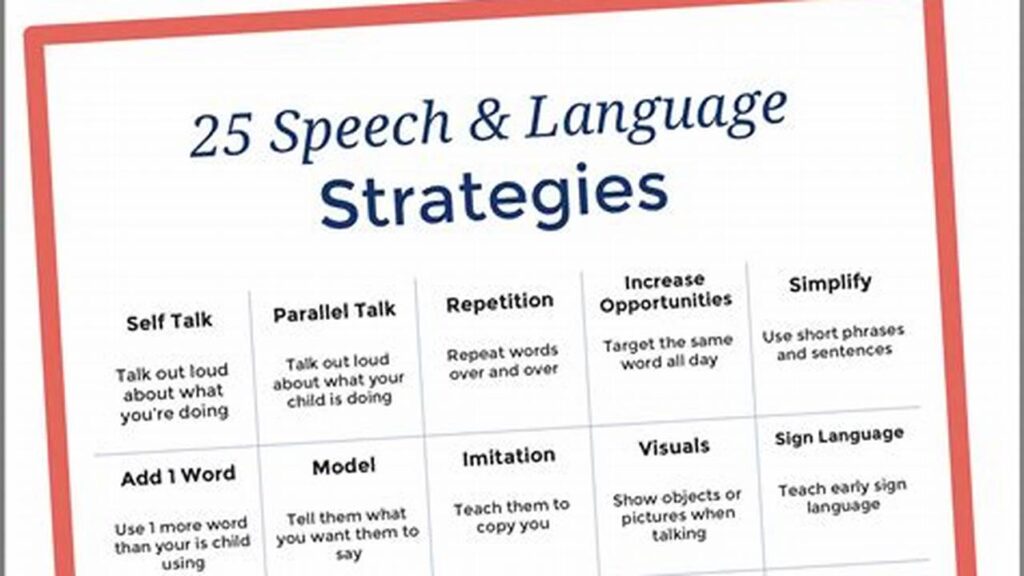
Tip 1: Narrate daily activities to expose children to a continuous stream of language.
Tip 2: Sing songs and rhymes together to introduce new vocabulary and improve pronunciation.
Tip 3: Limit screen time and prioritize face-to-face interactions to promote natural communication.
Tip 4: Be patient and encouraging, celebrating every milestone in a child’s speech development journey.
Frequently Asked Questions
Q: At what age should I be concerned about my child’s speech?
While developmental milestones vary, consult a healthcare professional if your child isn’t babbling by 12 months, using single words by 18 months, or forming simple sentences by age 3.
Q: How can I encourage my child to talk more?
Create opportunities for conversation, ask open-ended questions, and respond enthusiastically to their attempts at communication. Avoid finishing their sentences or interrupting them.
Q: What are some signs of a speech delay?
Difficulty understanding simple instructions, limited vocabulary compared to peers, and frustration with communication can be indicators of a potential speech delay.
Q: Are there any activities that can help improve my child’s pronunciation?
Playing word games, reading aloud together, and singing songs can help children practice sounds and improve their pronunciation skills.
Q: How can I make practicing speech fun for my child?
Incorporate play-based activities, use puppets or storytelling, and make it a social experience by involving siblings or friends.
Q: What role does technology play in speech development?
While technology can be a supplemental tool, it should not replace face-to-face interaction, which is crucial for natural language development.
Nurturing a child’s communication abilities is an investment in their future. By implementing these strategies and creating a supportive environment, parents can empower their children to become confident and effective communicators.