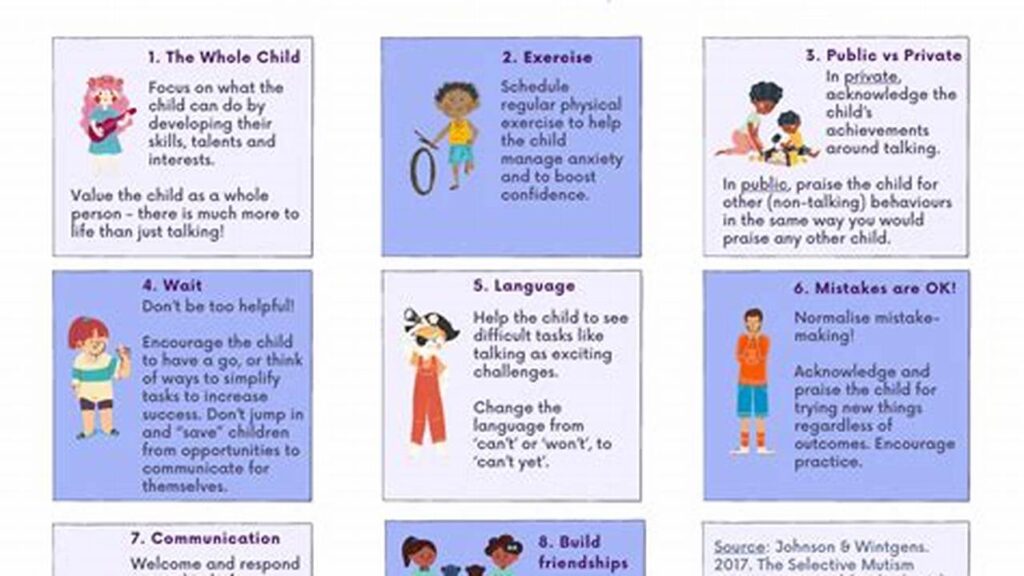

Navigating the challenges of selective mutism requires a multifaceted approach, combining parental understanding with effective strategies. This information aims to empower parents with the knowledge and tools to support their children in overcoming communication barriers and finding their voice in various social settings.
Understanding Selective Mutism
Selective mutism is not simply shyness or defiance. It’s a complex anxiety disorder that inhibits a child’s ability to speak in specific social situations, despite possessing normal communication skills in comfortable environments.
Building a Supportive Environment
Creating a safe and encouraging atmosphere at home is paramount. This includes avoiding pressure to speak and focusing on building the child’s overall confidence.
Collaboration with Educational Professionals
Working closely with teachers and school staff is essential. A consistent approach between home and school creates a unified support system for the child.
Gradual Exposure to Social Situations
Slowly introducing the child to increasingly challenging social scenarios can help desensitize them to anxiety triggers.
Behavioral Therapies
Evidence-based therapies, such as cognitive behavioral therapy (CBT), can equip children with coping mechanisms and strategies to manage anxiety.
Play Therapy
Play-based interventions provide a non-threatening environment for children to express themselves and work through their anxieties.
Speech-Language Therapy
Speech therapy can address any underlying communication difficulties and build confidence in speaking abilities.
Focusing on Nonverbal Communication
Encouraging alternative forms of communication, such as writing, drawing, or gestures, can ease the pressure to speak verbally.
Positive Reinforcement
Celebrating small victories and acknowledging effort, rather than focusing solely on verbal communication, fosters self-esteem and encourages progress.
Patience and Understanding
Overcoming selective mutism is a gradual process. Patience, empathy, and consistent support are crucial for the child’s success.
Tips for Parents
Tip 1: Create a Communication-Rich Home: Engage in regular conversations, storytelling, and singing to promote comfortable communication.
Tip 2: Practice Social Scenarios: Role-playing different social situations can help prepare children for real-life interactions.
Tip 3: Collaborate with Support Groups: Connecting with other families facing similar challenges can provide valuable insights and emotional support.
Tip 4: Celebrate Small Steps: Acknowledge and praise any progress, no matter how small, to build confidence and motivation.
Frequently Asked Questions
What are the common signs of selective mutism?
Consistent inability to speak in specific social settings, despite speaking freely in other environments, is a key indicator.
At what age does selective mutism typically emerge?
Selective mutism often becomes apparent between the ages of three and five, coinciding with the start of preschool or kindergarten.
Can selective mutism be overcome without professional help?
While some children may naturally outgrow selective mutism, professional guidance is generally recommended for effective and long-term support.
How can schools support children with selective mutism?
Creating a supportive classroom environment, implementing individualized communication plans, and collaborating closely with parents are vital.
What is the long-term outlook for children with selective mutism?
With appropriate intervention and support, most children with selective mutism can overcome their communication difficulties and lead fulfilling lives.
How can I differentiate between shyness and selective mutism?
While shyness is a common personality trait, selective mutism involves a consistent inability to speak in specific social situations, causing significant distress and functional impairment.
Empowering parents with the right strategies is key to unlocking the voices of children with selective mutism. By fostering a supportive environment, collaborating with professionals, and employing evidence-based techniques, families can help their children navigate social challenges, build confidence, and express themselves freely.