
Developing strong reading abilities is crucial for a child’s academic success and lifelong learning. Parental involvement plays a significant role in nurturing these skills from an early age. This article provides guidance and practical strategies for parents to effectively support their children’s reading development.
Importance of Early Reading Development
Early exposure to reading and literacy-rich environments establishes a strong foundation for future academic achievement.
Creating a Reading-Rich Environment
Surrounding children with books, magazines, and other reading materials fosters a love for reading and encourages exploration.
Reading Aloud Regularly
Shared reading experiences create positive associations with books and enhance listening comprehension.
Modeling Reading Behavior
Children often emulate the behaviors they observe, making it important for parents to be active readers themselves.
Making Reading Fun and Engaging
Incorporating games, interactive activities, and technology can make reading enjoyable and motivating.
Visiting Libraries and Bookstores
Regular visits to libraries and bookstores provide access to a wide variety of books and foster a sense of community around reading.
Discussing Books and Stories
Engaging in conversations about books helps children develop critical thinking skills and deepen their understanding of narratives.
Encouraging Independent Reading
Providing opportunities for children to choose their own books and read independently cultivates a sense of ownership and autonomy.
Addressing Reading Challenges
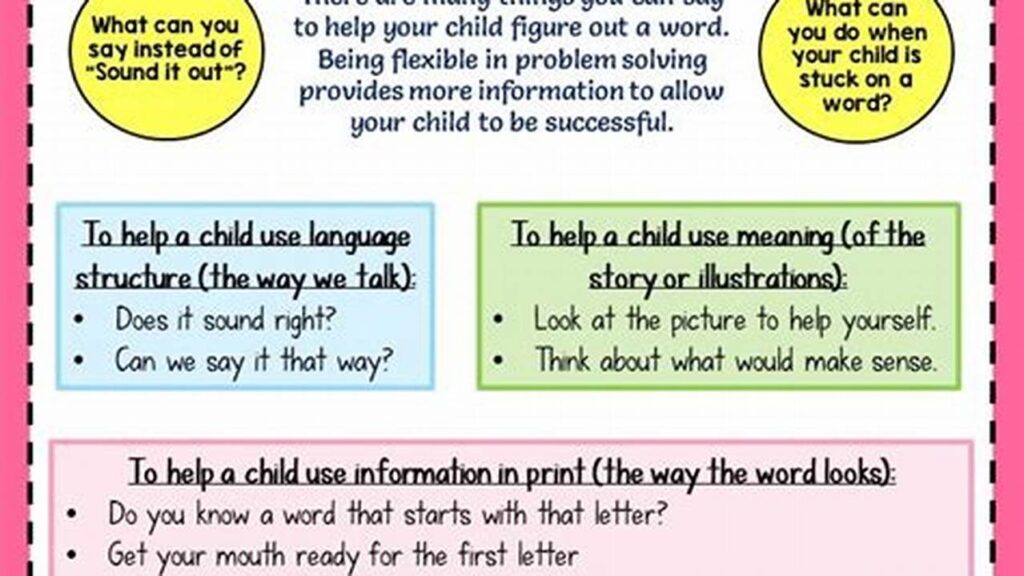
Recognizing and addressing reading difficulties early on is crucial for preventing long-term struggles.
Working with Educators
Collaborating with teachers and other educational professionals provides valuable insights and support for a child’s reading development.
Tips for Supporting Reading Development
Tip 1: Start Early: Introduce books and reading materials to children from infancy.
Tip 2: Be Patient: Children develop reading skills at different paces. Provide encouragement and support throughout the process.
Tip 3: Make it Interactive: Engage children in discussions, ask questions, and encourage them to connect with the text.
Tip 4: Celebrate Successes: Acknowledge and celebrate milestones in reading development to build confidence and motivation.
Frequently Asked Questions
How can I help my child who is struggling with reading?
Consult with their teacher or a reading specialist for personalized strategies and support.
What are some effective ways to make reading fun?
Incorporate games, interactive apps, and dramatic storytelling to enhance engagement.
How much time should my child spend reading each day?
Even short, regular reading sessions can have a significant positive impact.
What if my child doesn’t enjoy reading?
Experiment with different genres, formats, and reading activities to find what sparks their interest.
At what age should I start reading to my child?
Begin reading aloud to infants as early as possible to foster a love for books and language.
How can I encourage my child to read independently?
Create a designated reading space, provide access to a variety of books, and model independent reading behavior.
By actively engaging in these strategies, parents can empower their children to become confident and proficient readers, setting them up for success in all areas of learning.