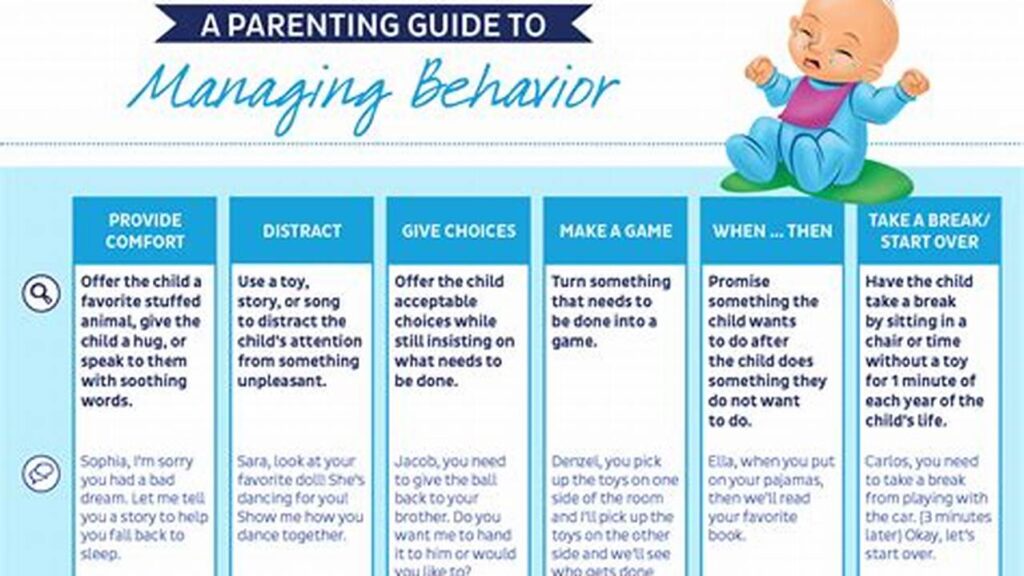

Managing toddler behavior can be challenging, but employing positive and consistent approaches can foster healthy development and reduce parental stress. Understanding the developmental stage of toddlers, characterized by rapid growth, burgeoning independence, and limited language skills, is key to implementing effective strategies. These strategies aim to guide toddlers towards self-regulation, empathy, and appropriate social interaction.
Consistency
Maintaining consistent routines and rules helps toddlers understand expectations and promotes a sense of security.
Positive Reinforcement
Focusing on desired behaviors and rewarding them with praise or small privileges encourages repetition.
Clear Communication
Using simple language and clear instructions ensures toddlers understand what is expected of them.
Redirection
Diverting a toddler’s attention from an undesirable activity to a more appropriate one can prevent tantrums and promote engagement.
Logical Consequences
Implementing natural consequences related to misbehavior helps toddlers understand cause and effect.
Time-Outs
Brief, supervised breaks can provide toddlers with an opportunity to calm down and regain control.
Modeling Desired Behavior
Children learn by observing adults; demonstrating positive behaviors like sharing and kindness sets a strong example.
Empathy and Validation
Acknowledging a toddler’s feelings, even when setting limits, helps them feel understood and respected.
Avoiding Power Struggles
Offering choices within reasonable limits empowers toddlers and reduces the likelihood of defiance.
Seeking Support
Connecting with other parents, support groups, or professionals can provide valuable guidance and resources.
Tip 1: Create a Predictable Environment
Establishing consistent routines for meals, naps, and bedtime helps toddlers feel secure and reduces anxiety.
Tip 2: Offer Choices
Giving toddlers simple choices, such as which book to read or which toy to play with, empowers them and reduces resistance.
Tip 3: Use Positive Language
Framing instructions positively and focusing on desired behaviors encourages cooperation.
Tip 4: Stay Calm
Responding to challenging behaviors with patience and understanding helps de-escalate situations and models emotional regulation.
Why are consistent routines important for toddlers?
Consistent routines provide toddlers with a sense of predictability and security, reducing anxiety and promoting cooperation.
How can I effectively use time-outs with my toddler?
Time-outs should be brief, supervised, and used as a calm-down strategy, not a punishment. Explain the reason for the time-out calmly and consistently.
What are some examples of logical consequences?
If a toddler throws a toy, the logical consequence might be removing the toy for a short period. If they refuse to eat their dinner, the consequence might be no snacks before bedtime.
Where can I find additional support for managing toddler behavior?
Parenting groups, community resources, and child development specialists can offer valuable guidance and support.
How can I encourage positive behavior in my toddler?
Focus on rewarding desired behaviors with praise and attention. Clearly communicate expectations and offer choices within reasonable limits.
What should I do when my toddler has a tantrum?
Remain calm and ensure the child is safe. Avoid giving in to demands during the tantrum. Once the child has calmed down, offer comfort and discuss appropriate behavior.
Successfully navigating the toddler years requires patience, understanding, and a consistent approach. By implementing these strategies, parents can effectively guide their toddlers towards positive behavior patterns, fostering healthy development and building a strong parent-child relationship.