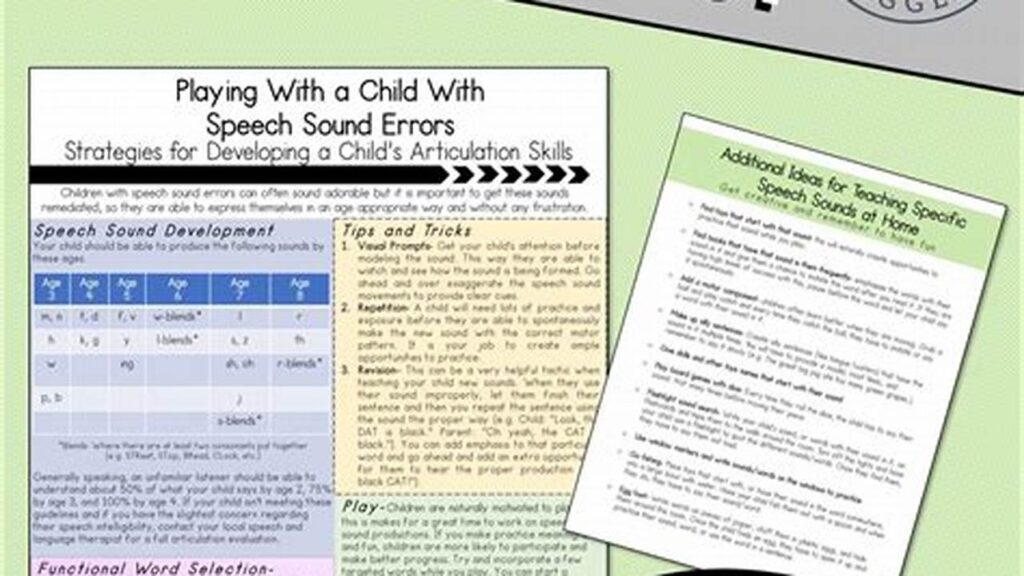

Clear communication is crucial for a child’s development and academic success. Difficulties with articulation can impact a child’s confidence and ability to express themselves effectively. Providing parents with practical strategies and resources empowers them to support their children in developing clear speech. This information offers valuable techniques and insights for parents navigating the journey of improving their child’s articulation skills.
Importance of Early Intervention
Addressing articulation difficulties early can prevent potential academic and social challenges. Early intervention maximizes the child’s neuroplasticity and allows for timely support.
Understanding Articulation Development
Familiarization with typical speech development milestones helps parents identify potential concerns and understand the progression of sound acquisition.
Creating a Supportive Environment
A positive and encouraging atmosphere fosters a child’s confidence and willingness to practice speech sounds.
Engaging Activities for Speech Improvement
Fun and interactive activities, such as games and playful exercises, can make practicing speech sounds more enjoyable and motivating for children.
Practical Articulation Techniques
Simple techniques, like modeling correct pronunciation and providing clear verbal cues, can be easily implemented by parents at home.
Identifying Persistent Challenges
Recognizing when professional guidance is necessary ensures timely intervention from a speech-language pathologist.
Collaboration with Speech-Language Pathologists
Working closely with a speech therapist provides expert guidance, personalized strategies, and ongoing support tailored to the child’s specific needs.
Monitoring Progress and Celebrating Successes
Tracking progress and acknowledging achievements motivates the child and reinforces positive speech habits.
Tips for Parents
Tip 1: Read aloud regularly. Reading aloud exposes children to a wide range of sounds and vocabulary, promoting language development.
Tip 2: Model clear pronunciation. Speaking clearly and distinctly provides children with accurate auditory models for speech sounds.
Tip 3: Engage in playful sound practice. Incorporating games and activities makes practicing speech sounds more engaging for children.
Tip 4: Be patient and encouraging. Learning new skills takes time and effort. Providing positive reinforcement and support builds a child’s confidence.
Frequently Asked Questions
At what age should I be concerned about my child’s speech clarity? While some variations in speech development are normal, persistent difficulties with specific sounds beyond a certain age warrant consultation with a speech-language pathologist.
How can I find a qualified speech-language pathologist? Pediatricians, schools, and professional organizations can provide referrals to qualified speech-language pathologists in your area.
What are some common signs of articulation difficulties? Common signs include sound substitutions, omissions, distortions, and difficulty producing specific sounds consistently.
How can I support my child’s speech development at home? Creating a supportive environment, engaging in playful sound practice, and modeling clear pronunciation are effective ways to support speech development at home.
How long does speech therapy typically take? The duration of speech therapy varies depending on the individual child’s needs and the severity of the articulation difficulties.
Are there online resources available for parents? Yes, numerous reputable websites and organizations offer valuable resources and information for parents seeking to support their child’s speech development.
Supporting a child’s journey toward clear speech requires patience, understanding, and consistent effort. By utilizing effective strategies and seeking professional guidance when necessary, parents can empower their children to communicate effectively and confidently.